
エスペラント語 Esperanto
-

- 日本語
- English
-
エスペラント語は、人工言語のひとつです。人間にとって識別可能で有限な音声をベースとする豊かな語彙をもち、明解で規則的な文法を用いて無限のメッセージを生成する機能は、自然言語に劣りません。
-
Esperanto is an artificial language. It has a rich vocabulary based on human-identifiable and finite speech sounds, and its ability to generate an infinite number of messages using a clear and regular grammar is no less than that of a natural language.
閉じる
閉じる
閉じる
歴史
History
- 1887年
- ラザロ・ルドヴィコ・ザメンホフが国際語の言語案発表。
- 1905年
- 『エスペラントの基礎』発刊。第1回世界エスペラント大会開催(フランス)、33ケ国から688人が参加。
- 1906年
- 二葉亭四迷が学習書を発行するなど日本での本格的な普及運動開始。
- 1908年
- 世界エスペラント協会設立。
- 1919年
- 日本エスペラント学会が発足(1956年に世界エスペラント協会加盟)。
- 1965年
- 第50回世界エスペラント大会を東京に招致(アジア初開催)。
- 1966年
- エスペランティストの国際ホームステイシステム「パスポルタ・セルヴォ」開始。
- 現在
- 200~2000名の第一言語話者がいると推定されている。
- 1887
- Lazaro Ludoviko Zamenhof published a language he created as an international language (lingvo internacia).
- 1905
- Fundamento de Esperanto ‘Guide to Esperanto’ was published. The first World Esperanto Congress was held in France with 688 participants from 33 countries.
- 1906
- Futabattei Shimei published Sekai-go ‘International Language’, leading to the promotion of the language in Japan.
- 1908
- International Esperanto Association (IEA) was established.
- 1919
- Japanese Association for Esperanto was established (to subsequently join IEA in 1956).
- 1965
- The 50th World Esperanto Congress was hosted in Tokyo as the first meeting in Asia
- 1966
- Pasporta Servo, the international home-stay system for Esperantists starts.
- Present
- It is estimated that there are about 200 to 2000 first language speakers
エスペラント名をもつ駅
Esperanto Station Names in Japan
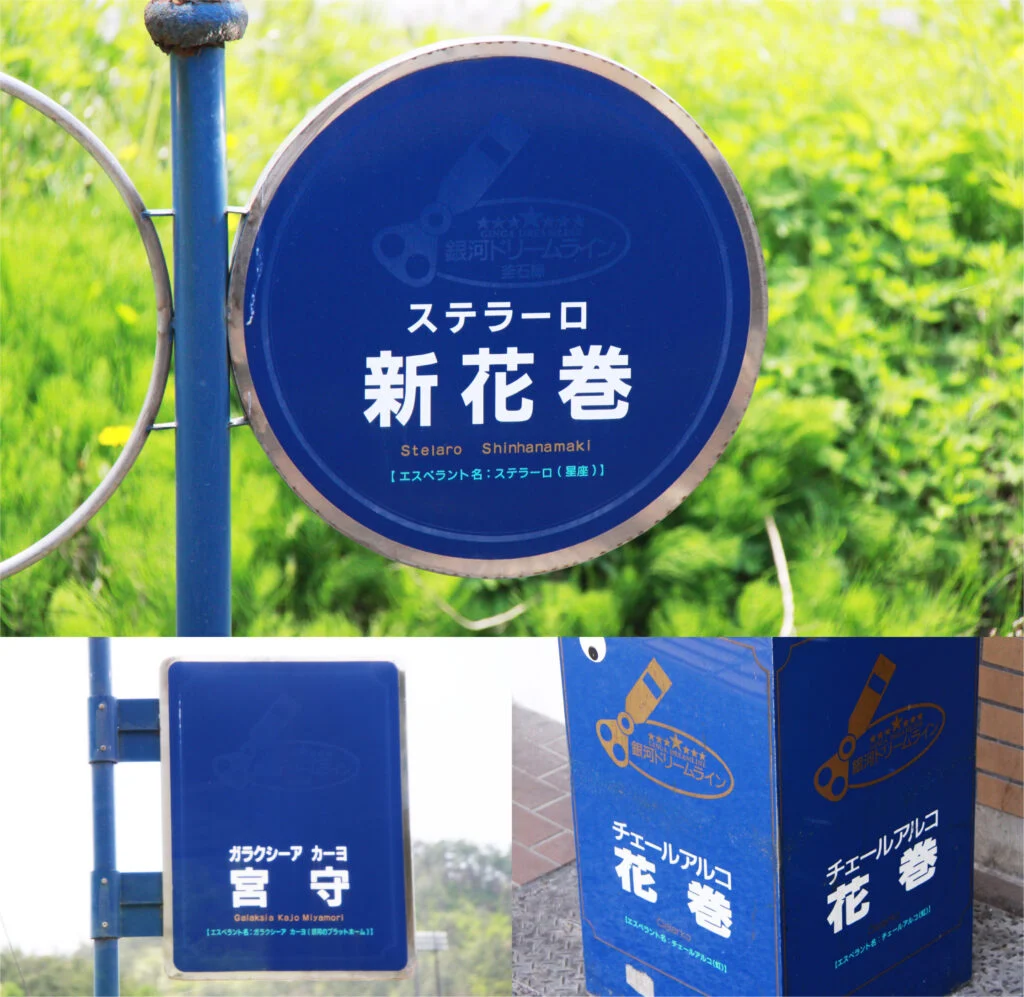
JR Kamaishi Line (“Ginga Dream Line”) has an Esperanto nickname for all the 24 stations after a local Esperantist Miyazawa Kenji, who is a nationally known writer from this area. Photo by Yoshioka Noboru
エスペラント関連出版物
Grammars and Dictionaries
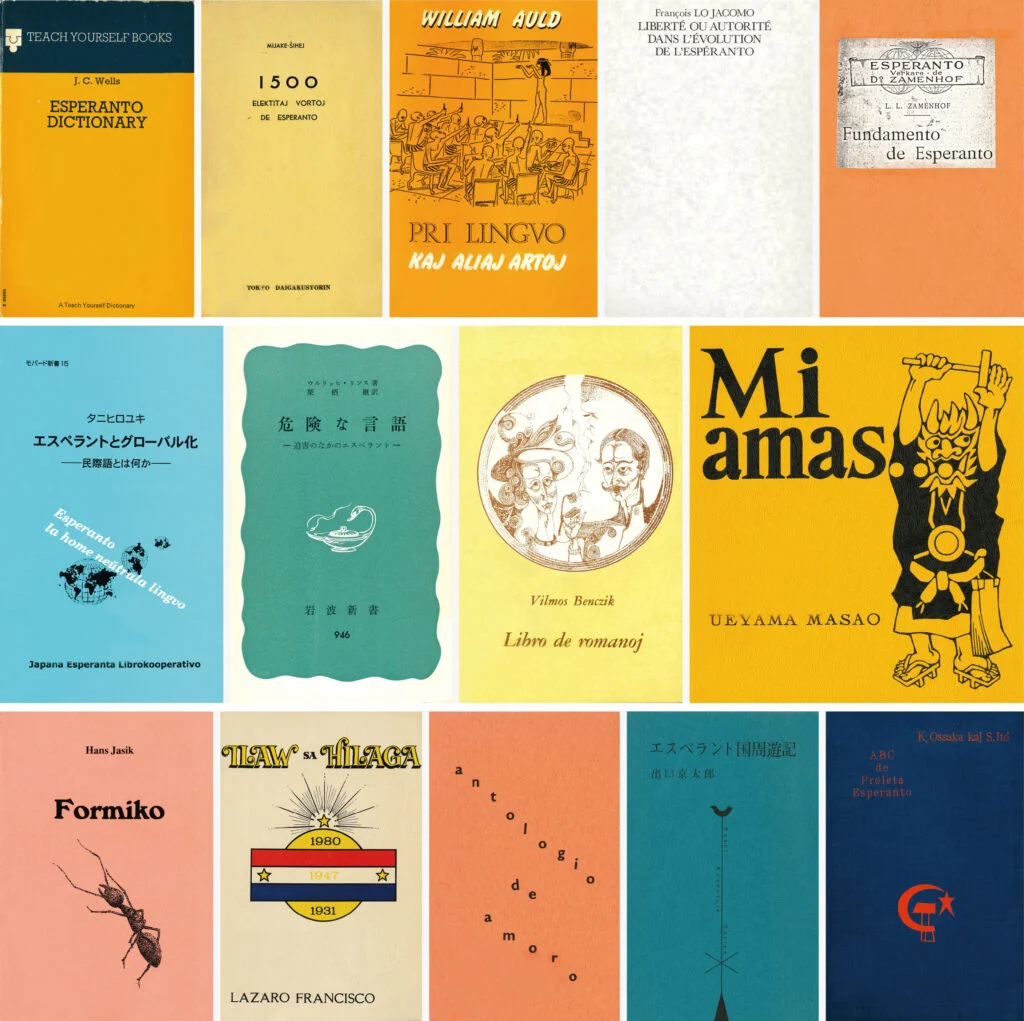
Various dictionaries and grammar books of Esperanto are available.
協力:庄司博史
Produced with Shoji Hiroshi
Close