
コトバの変化(2)内的要因と外的要因 Language Change (2) Internal Change and External Change
-

- 日本語
- English
-
言語変化には、内的要因によるものと外的要因によるものがあります。内的要因には、話し手が発話しやすい方向に向かう簡略化、受け手が理解しやすい方向に向かう明確化の他に、認知的にプロセスしやすい方向に向かう対称化・規則化、伝達の効率性と透明性の確保への変化などがあります。これらは、音声言語と手話言語、いずれにも見られます。
-
Language change can be caused by internal or external factors. Internal factors include simplification, which moves in a direction that is easy for speakers to produce, and clarification, which moves in a direction that is easy for receivers to understand. There are also symmetrization and regularisation, which move in a direction that is easy to process cognitively, and changes that ensure the efficiency and transparency of communication. These can be seen in both spoken and signed languages.
閉じる
閉じる
閉じる
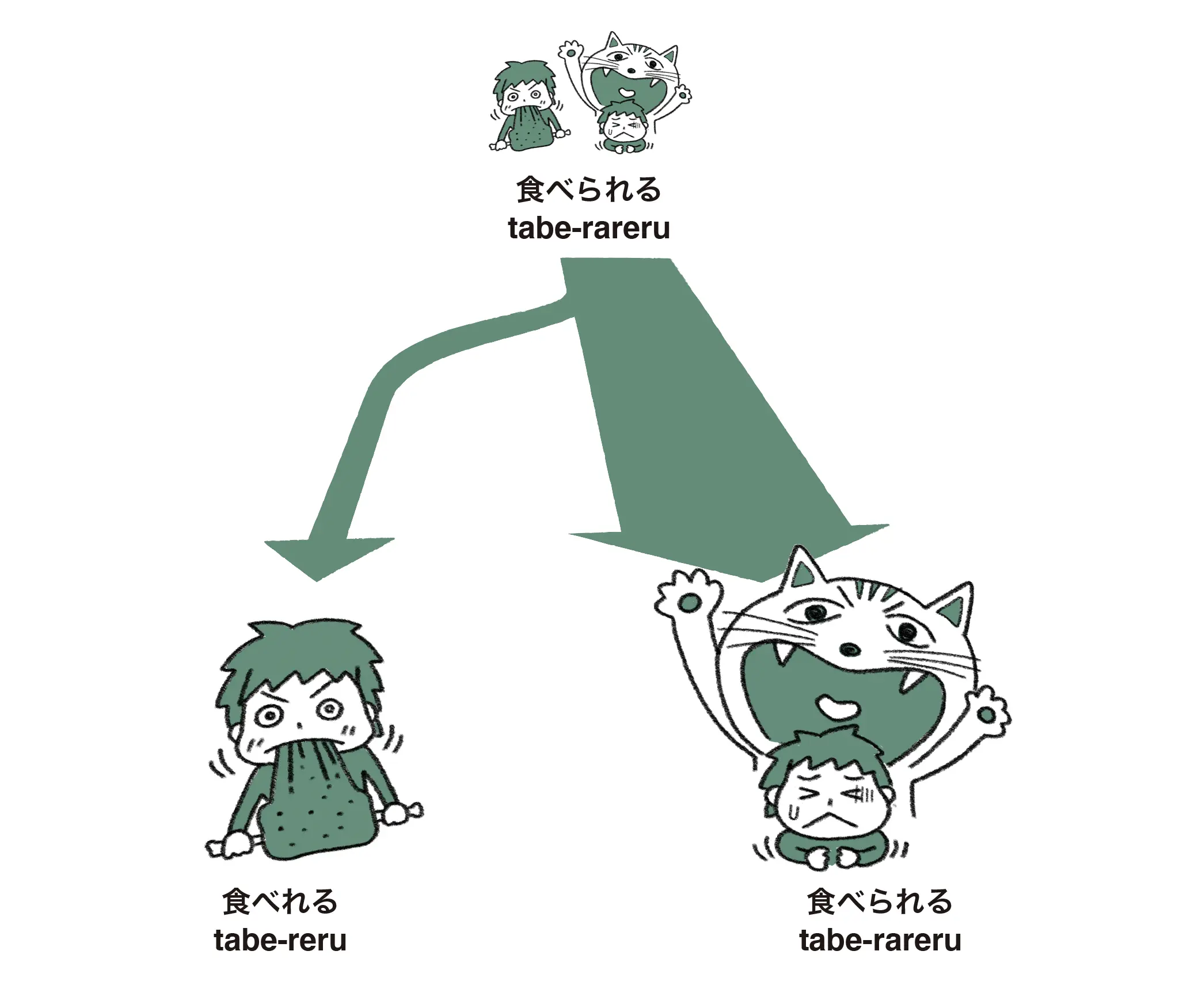
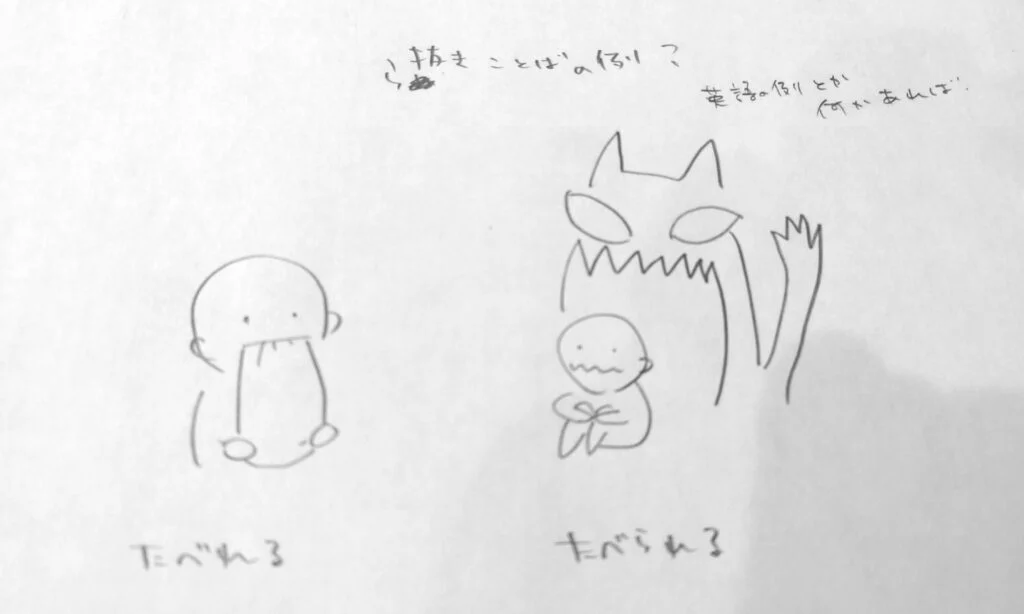
例として「たべられる」を使用。元は2つの意味を持つ「たべられる」→「たべれる」と「たべられる」に分化。

Close