言語の多様性=人類が持つ豊かな財産 Language Diversity As a Rich Asset of Humanity
-
- 日本語
- English
-
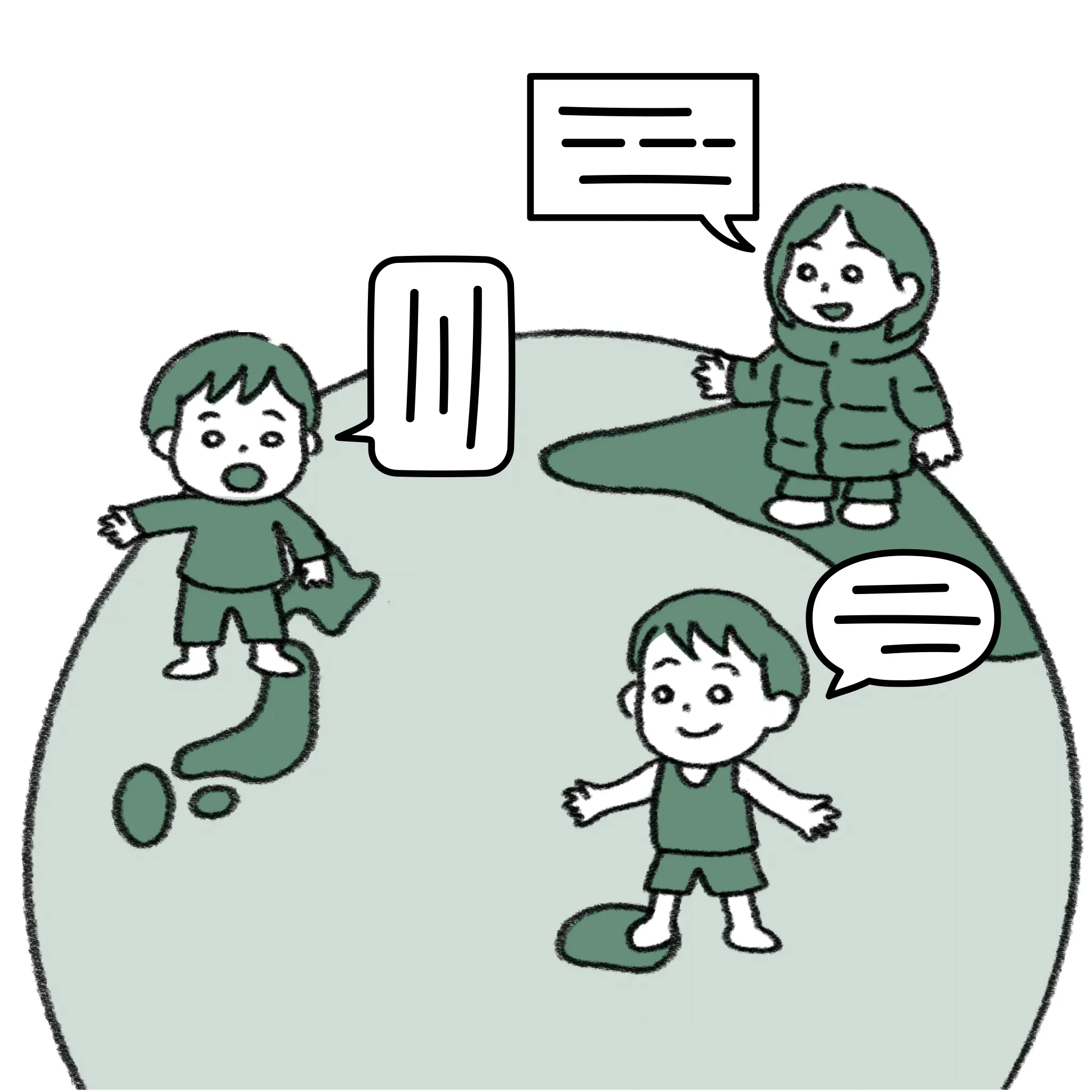
「言語」というと、形が決まった、あたかも完成したもののようなイメージがあるかもしれません。けれども実際には、コトバの世界は変種と変化に満ちあふれています。
まず、個人のレベルでは、話し相手や状況に応じてさまざまな表現を使い分けています。話者ひとりだけでも、さまざまなことばを持っているわけです。さらに、地域や社会など、グループごとに見られる特徴もあります。少しずつ、違う変種を使う個人が集まり、さらにグループが集まって、一つの言語を共有する集団はできています。
一方、言語は日々、変化しています。そのなかには、ヒトである話者が生物としての制約を受けた結果、表現がしやすかったり、理解がしやすい方向に起こる内的変化があります。また、話者が遭遇したモノの名前が新しく加わったり、逆に使わなくなったものの名前の意味が変わったり、語そのものが消えてしまうような、外的変化もあります。さらに、日々の暮らしの中で得られた知識や知恵が、ことわざのように蓄積されてゆくこともあります。人との関わりの中で、より気持ちよくコミュニケーションができる方向に使い方が変化することもあるでしょう。ひとつひとつの集団にあるさまざまな変種、そしてその様々な変種に起こる変化が積み重なって、言語はできあがっています。何万年もかけてつみ重なってできあがったものが、現在、世界にある七千あまりの言語です。
言語を総体として見ても、変化に富んでいます。話者がいなくなって消滅することもありますし、逆に新しい言語が生まれることもあります。言語が継承されるためには、話者のコミュニティが必要です。植民地時代に宗主国の言語が主として使われるようになった地域のように、話者コミュニティ全体で使われる言語が変わってしまうと、もともとあった言語は使われなくなってしまうかもしれません。新しい土地に移住して、周りに話者コミュニティがないと、子供たちは土地の言語を身に着け、親の言語は継承されません。このことは手話言語については特に重要で、聴覚障害を持つ子供の九割五分以上の家庭では音声言語が話されていることから、これまで、ろう児の集まるろう学校が手話言語が継承される場として大きな役割を果たしてきました。
どの言語ひとつをとっても、その言語とその言語に反映された歴史を大事に思っている話者がいます。その言語を使うことで、自己を表現することができ、生き生きと活躍できる人たちがいます。その人たちの集まりが、地球上の人口77.5億人です。地球上のすべての人たちが、どこへ行っても、使っている言語にかかわらず、自己をのびのびと表現できて力を発揮できる、そんな社会になってほしいと願います。 -
When we think of “language,” we may have an image of something that has a fixed form and is almost complete. In reality, however, the world of language is full of variation and change.
On an individual level, we use different expressions depending on who we are talking to and the situation. Even a single speaker has a wide range of words at his or her disposal. There are also characteristics that can be seen in groups, such as regional and social groups. Individuals who use slightly different variants gradually come together, and groups come together to form a group that shares a single language.
On the other hand, languages change from day to day. Some of these changes are internal, and occur as a result of the biological limitations of the speakers, making it easier to express oneself or easier to understand. There are also external changes, such as the addition of new names for things that speakers encounter, or the change in meaning of names for things that are no longer used, or even the disappearance of words themselves. In addition, knowledge and wisdom gained in everyday life may accumulate over time, as in the case of proverbs. The way we use language may also change in the direction of more pleasant communication in our interactions with other people. The different variants within each group, and the changes that occur in these variants, accumulate to form a language. The result of this accumulation over tens of thousands of years is the 7,000 or so languages that exist in the world today.
Even when we look at languages as a whole, they are full of change. Sometimes languages disappear when there are no more speakers, and conversely, new languages are born. For a language to be handed down, there must be a community of speakers. If the language used by the whole community of speakers changes, as happened in some regions during the colonial era when the language of the ruling power became the main language, the original language may cease to be used. If you move to a new place and there is no community of speakers around you, your children will learn the language of the country and will not inherit your language. This is particularly important for sign languages, and since more than 95% of families with hearing impaired children speak spoken languages, schools for the deaf, where deaf children gather, have played an important role as places where sign languages are inherited.
For every language, there are speakers who cherish the language and its history. There are people who can express themselves and live their lives to the fullest by using that language. The total population of the world is 7.75 billion. I hope that the world will become a society where everyone can express themselves freely and make the most of their abilities, no matter where they are or what language they use.