
複数の言語を身につける Using More Than One Language
-

- 日本語
- English
-
いろいろな言語を話せる人って、すごいと思いますか?それともあなた自身が複数の言語を話して暮らしていますか? 複数の言語が使われている社会で育てば自然にマルチリンガルになりますし、手話言語が使われている環境で育つ音声言語話者には手話言語と音声言語のバイリンガルになる人もいます。一方で、言語を習得できる機会が限られてしまうと、十分に使える言語がひとつもないまま大人になってしまうこともあります。
-
Do you think it’s cool to see someone speak more than one language? Or do you use several languages yourself? If you grow up in a society where more than one language is spoken, you will naturally become multilingual. If you grow up with signers, you might become bilingual in both signed and spoken languages. On the other hand, if opportunities to learn languages are limited, a person may grow up without being able to use any language with full functionality.
モノリンガル・バイリンガル・マルチリンガル Monolingual, Bilingual and Multilingual
- 3_3a.webm
それぞれ、単一言語・二言語・多言語の話者あるいは状態を指します。例えば、日本語ですべてのコミュニケーションを行う人はモノリンガルであり、日本語と英語を日常的に使う人ならばバイリンガルです。マルチリンガルは一般的に3言語以上の話者や状態を指し、中国語、英語・日本語を使い分ける人などが挙げられます。
This refers to a person or a state of being able to speak one, two, or multiple languages. For example, someone who does all communications in Japanese is monolingual, while someone who routinely uses Japanese and English is bilingual. Multilingual generally means a person who can speak or a state of being able to manipulate at least three languages or more, such as someone who can use Chinese, English, and Japanese.
モノモーダル・バイモーダル Monomodal and Bimodal
- 3_3b.webm
モーダルは「様式や方法で」という意味です。言語の場合、表現様式が単独なら「モノ」、複数なら「バイ」です。例えば、音声だけによるアナウンスはモノモーダルで、同時に文字で示せばバイモーダルです。聴覚障害児の場合でも、視覚言語の手話に加えて、人工内耳手術などで音声の利用が加わればバイモーダルになります。
Modal refers to “format and method”. In the case of language, a single expression format is “mono” and multiple expression formats is “bi”. For example, an announcement made only with sound is monomodal, while if the same announcement was made with letters as well, it is bimodal. In the case of hearing-impaired children, if visual language (sign language) is combined with the use of voice through a cochlear implant surgery, it becomes bimodal.
ダブルリミテッド Limited Bilingual
- 3_3c.webm
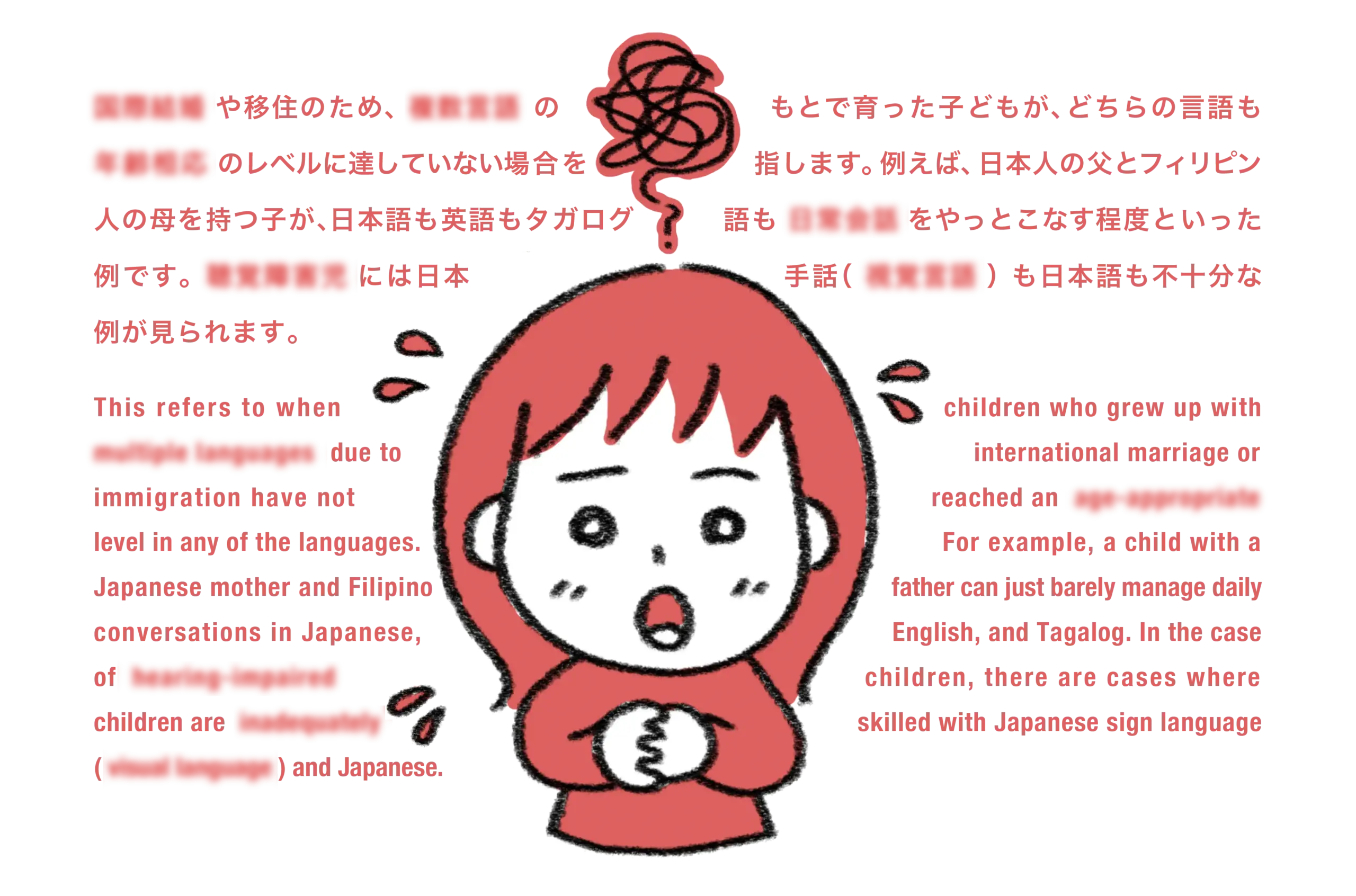
国際結婚や移住のため、複数言語 のもとで 育った子どもが、どちらの言語も年齢相応のレベルに達していない場合を指します。例えば、日本人の 父とフィリピン人の母を持つ子が、日本語も英語もタガログ語も日常会話をやっとこなす程度といった例です。聴覚障害児 には日本手話(視覚言語)も日本語も不十分な例が見られます
This refers to when children who grew up with multiple languages due to international marriage or immigration have not reached an age-appropriate level in any of the languages. For example, a child with a Japanese mother and Filipino father can just barely manage daily conversations in Japanese, English, and Tagalog. In the case of hearing-impaired children, there are cases where children are inadequately skilled with Japanese sign language (visual language) and Japanese.
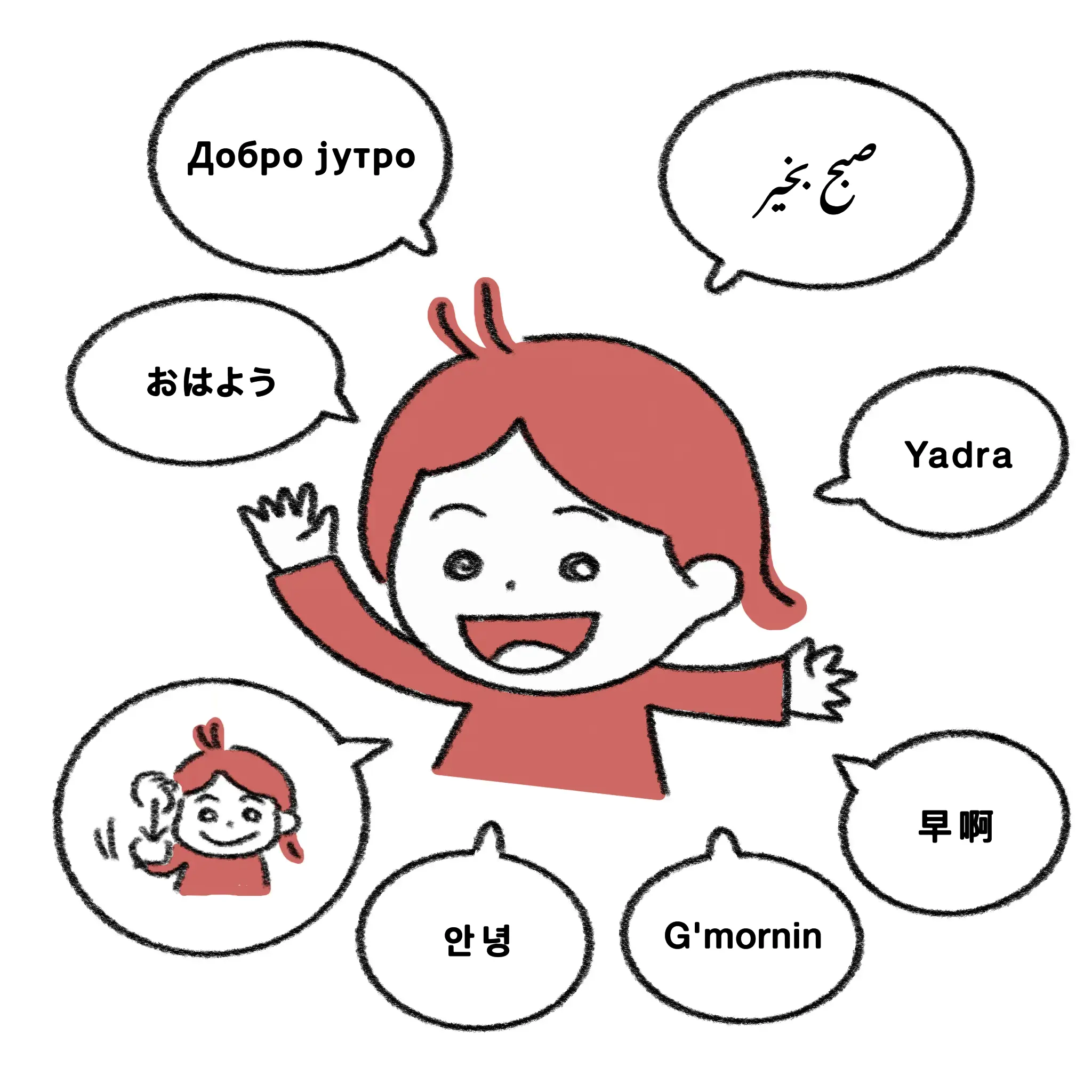
おはよう
G’mornin!
Yadra!
ウルドゥー語
早啊
Добро јутро!
手話
「안녕!」
協力:佐々木 倫子
Contributed by Sasaki Michiko
協力:佐々木 倫子
Contributed by Sasaki Michiko