コトバの変化(1)はじめに Language Change (1) Introduction
-
- 日本語
- English
-
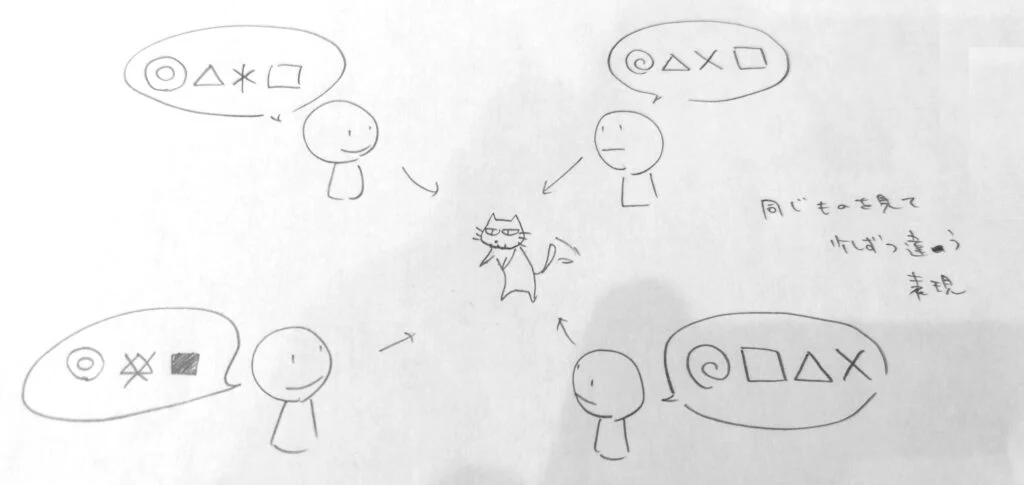
自然言語は、音声言語であっても手話言語であっても、構音、語形、意味、文法などさまざまな面で常に変化しています。話者間でみられる構音や言葉遣いの違い(揺れ)が時には広がり、時には淘汰されて、言語全体としての歴史的な変化につながります。このような違いの発生は、話し手の身体的・認知的特徴および、地理的環境、社会的な属性などにも影響を受けます。
-
Natural languages, whether spoken or signed, are constantly changing in all their attributes, such as phonology, morphology, semantics, grammar and others. Differences such as pronunciation and word usage always exist between speakers, sometimes spreading to become generalised and sometimes disappearing, leading to historical changes in the language as a whole. The occurrence of such differences is also influenced by the physical and cognitive characteristics of the speakers, as well as their geographical environment and social characteristics.
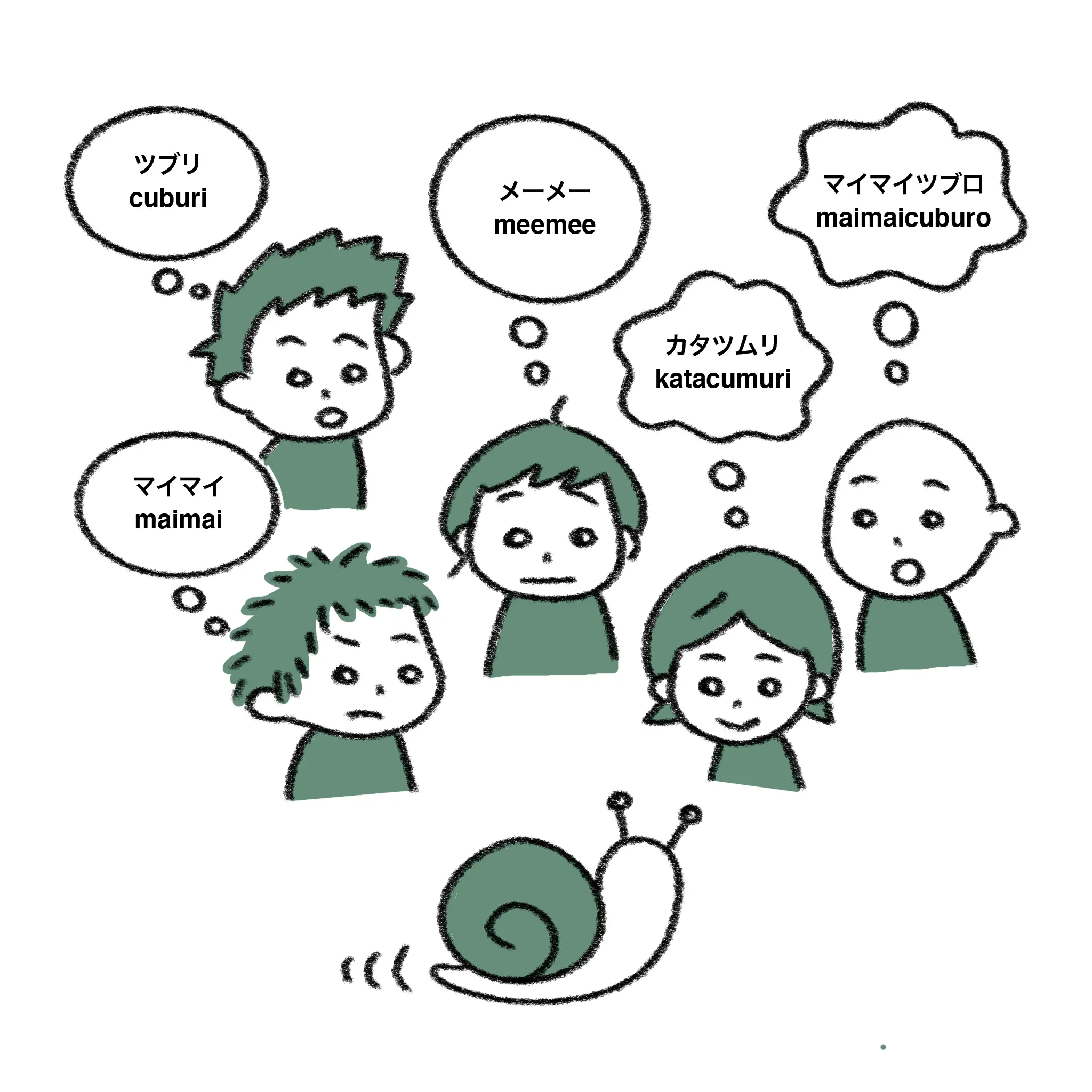
1.「4.2.3 コトバの変化(1)はじめに」における「かたつむり」のバリエーションに関して
★マイマイ(maimai) (関東地方、中部地方、中国地方、九州北部など)
★メエメエorメーメー(meemee) (中国地方など)
マイマイズ(maimaizu) (東京都多摩地方など)
★マイマイツブロ(maimaicuburo)(東京都都心部など)
カ(ア)サンマイ(ka(a)sanmai)(静岡県など)
★ツブリ(cuburi) (東北地方、九州地方など)
ツングラメ(cungurame) (九州南部など)
★カタツムリ(katacumuri) (日本全域)
*デンデンムシ
*ナメクジ
などが挙げられます(国立国語研究所『日本言語地図』、柳田國男『蝸牛考』より)。